
The Michigan Football sign-stealing scandal didn’t just surface—it erupted like a long-simmering fuse finally reaching its explosive end. The scandal unraveled with a plot so intricate it makes a John le Carré spy novel seem simple. But what if the real intrigue isn’t in what’s been revealed, but in what’s been overlooked?
The Initial Unveiling of the Scandal
The Michigan Football scandal sent shockwaves through the college football community. Allegations surfaced that staffers, under Michigan coach Connor Stalions’ direction, had attended games of upcoming Wolverines’ opponents. They also attended games of other top programs like Tennessee and Clemson, both ranked ahead of Michigan. These staffers allegedly passed signals to a struggling South Carolina team, which then unexpectedly dominated both Tennessee and Clemson. The operation, spanning 11 Big Ten schools, involved filming sidelines and recording coaches’ hand signals. While the media quickly blamed Michigan, whispers of an Ohio State connection began to emerge.
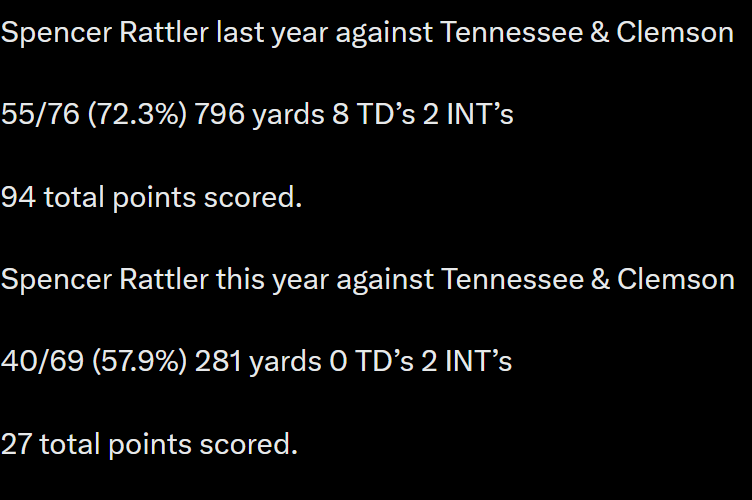
However, as the dust settled, this provocative alternative theory began to challenge the mainstream narrative and raises deeper questions: who truly benefits from this scandal? Could there be more to the story than we’ve been led to believe?
Questioning the Narrative: A Possible Sleeper Agent?
What if Connor Stalions wasn’t merely a Michigan coach, but a carefully crafted Trojan horse? Imagine a coach, raised and groomed by Ohio State. He is embedded deep within Michigan’s ranks. His sole mission is to erode the program from within. Each calculated misstep, a strategic blow designed to weaken the Wolverines, not just a scandal, but a covert operation years in the making. This controversial theory casts the scandal in a new light, suggesting that the true plot runs far deeper than anyone suspected.
As we dig deeper, the possibility emerges that Michigan’s alleged transgressions are just one piece of a much larger, more complex conspiracy. Let’s pull on that string and see where it goes.
Ohio State’s Decline and Rising Pressure

Over the past few seasons, the Ohio State Buckeyes have faced increasing pressure. Despite consistently ranking in the top five, only to fall well short of pundits predictions. Many believed their status was largely bolstered by a sympathetic national sports media. People also thought a relatively weak conference schedule contributed to their standing. Ohio State’s once-dominant program was losing ground—not only to their arch-rival Michigan but also to other top-tier programs, particularly in the Southeastern Conference.
In response to this decline, some suggest that a covert operation was conceived, blessed, and executed at the highest levels of Ohio State’s administration and possibly even in collaboration with ESPN/ABC. This operation aimed to tarnish Michigan’s rising success and reassert Ohio State’s dominance in college football.
The Mainstream Narrative
The notion that Ohio State could be involved in Michigan’s scandal seemed counterintuitive at first, perhaps even crazy. Why would Ohio State sabotage itself?
To some, it’s not as harebrained as it sounds.
Those in the know understood that the situation was far more complex. This was hybrid warfare—a mix of hard and soft power tactics. The true plot, if fully revealed, would expose Michigan’s deceit. It would also uncover Ohio State’s calculated role in orchestrating their rival’s downfall. The ultimate goal? Probation, revocation of wins, and coach suspensions, all leading to Michigan’s eventual collapse.
The Role of ESPN/ABC: Media Manipulation?
The collaboration of major sports networks like ESPN and ABC adds another layer of smoke to the conspiracy theory. Could these networks have played a role in shaping the narrative against Michigan? They are known for their close ties to college football. Were they complicit in an effort to undermine Michigan’s success to benefit Ohio State?
This theory suggests that the media’s coverage of the scandal was not just biased. It was part of a calculated effort to sway public opinion. It also aimed to protect Ohio State’s interests. The power of media in shaping perceptions cannot be underestimated, especially in a sport as beloved and scrutinized as college football.
The Anatomy of a Hybrid Warfare Operation
To fully understand the alleged conspiracy, we must explore the concept of hybrid warfare. This approach blends traditional military strategies with psychological and informational tactics. In this context, hybrid warfare could involve manipulating not just the actions of Michigan’s staff but also the public’s perception of the scandal.
The idea is that Ohio State, facing a decline in its football program, may have resorted to unconventional means to undermine Michigan. By planting a mole like Stalions and manipulating media coverage, they could have orchestrated a situation where Michigan’s own actions would lead to its downfall.
Reflexive Control: Manipulating Michigan
At the heart of this theory is the concept of reflexive control. Reflexive control is a strategy where an opponent is manipulated into making decisions that ultimately serve the manipulator’s interests. In this case, Stalions may have been using reflexive control to lead Michigan into actions that would later be used against them.
This approach would require a deep understanding of Michigan’s internal dynamics. Additionally, it would require the ability to predict how the program would respond under pressure. If true, it would mean that Ohio State wasn’t just aiming to win on the field; they were intent on breaking Michigan from within, using their own people and strategies against them.
Ohio State’s Ultimate Sacrifice: Winning at All Costs
The theory further posits that Ohio State was willing to make significant sacrifices to achieve their goal of dismantling Michigan. This could include losing a rivalry game, sacrificing a season, or even risking their own reputation. The ultimate objective? To see Michigan’s football program crumble. To eject Jim Harbaugh from College football. This would leave Ohio State as the unchallenged power in the Big Ten.
Such a strategy, if true, would reflect a level of commitment and ruthlessness. This goes far beyond the usual rivalries in college sports. It suggests a willingness to play the long game, using any means necessary to ensure their rival’s downfall.
Stalions’ Deceptive Role in Michigan
The idea that Stalions was a deep-cover operative for Ohio State is perhaps the most shocking element of this theory. It would mean that Michigan’s greatest betrayal came from within, from someone they trusted implicitly. Stalions’ alleged actions include attending games of Michigan’s future opponents. They might have also involved passing along strategic information. These actions would be seen in a new light—as part of a larger, more sinister plot.
Did Stalions’ near-religious devotion to Ohio State fueled his mission with an unyielding intensity? His deep-seated hatred for Michigan became the driving force behind his every move. He channeled that animosity into a relentless pursuit of his goal. Like a Tier One Operator, he mastered the mindset of knowing when to unleash the monster within. He also knew when to hold it back. He deployed his tactics with calculated precision. He single-mindedly focused on breaking Michigan from within.
A second Michigan Manifesto has just dropped?
In the ensuing chaos, the truth about Stalions emerged like a phoenix from the ashes. Investigators found a 500-page manifesto, also known as the Schembechler Papers was hidden in a safe in his Ann Arbor home. This revealing document was a blueprint for sabotage of Michigan. On the surface it looked like the real deal, a madman’s documentation of support for Michigan
It was the discovery of a second manifesto, allegedly written by Stalions, has only fueled speculation about a larger conspiracy. This document, hidden in his Ann Arbor home, supposedly outlines a detailed plan for sabotaging Michigan Football. It reads almost like a religious tract for Ohio State’s “true believers,” emphasizing a belief that the survival and dominance of Ohio State’s program justified any means necessary—even if it meant sacrificing one of their own.
If the full contents of this second manifesto are ever exposed, it has the potential to detonate a bombshell within a hidden conspiracy. This goes well beyond a single scandal, as it could unveil a sophisticated web of influence that has shaped the college football landscape for years.
Conclusion
The alternate theory—that a carefully groomed sleeper agent for Ohio State, embedded to dismantle Michigan from within—adds a new layer of complexity to the scandal. If true, this theory suggests that the scandal isn’t just about sign-stealing, but about a meticulously planned operation aimed at weakening a rival over time. As we sift through the details, the possibility of a larger, orchestrated plot emerges. This challenges our understanding of loyalty and rivalry in college football. This isn’t just a story of a scandal—it’s a question of whether Michigan’s greatest enemy was hiding in plain sight all along.


Leave a Reply