

I remember slipping off my flats near the doorway and immediately noticing how quiet the house felt once the sound of footsteps disappeared into the timber floors.
Built from heavy timber and stone, the house combines the warmth of an old mountain lodge with the quiet functionality of a place designed for somebody planning to stay awhile.

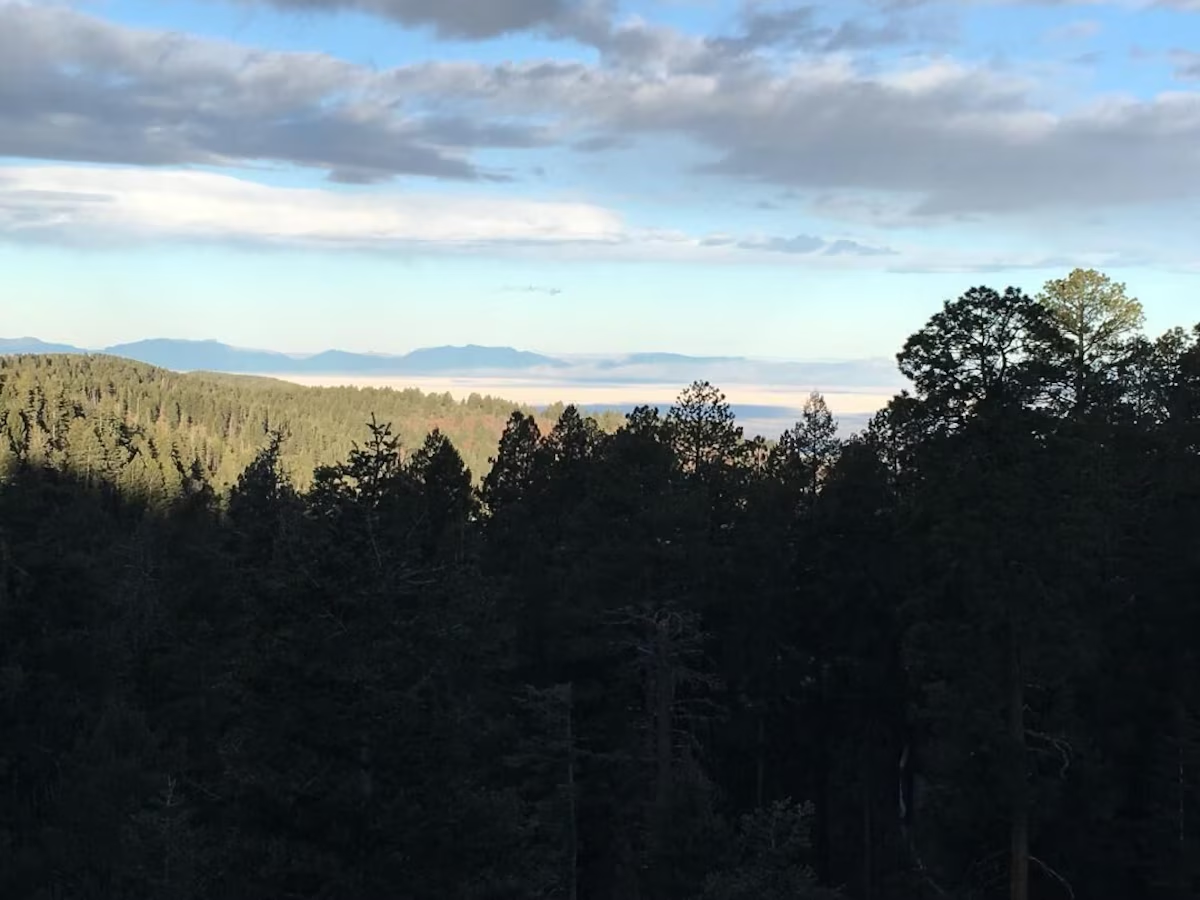
A long covered porch wraps around the structure, wide enough watch the storms coming in from the Basin, coffee at sunrise, and long stretches of silence. On clear mornings, the spectacular view stretches west across the Tularosa Basin toward the pale white sands of White Sands National Park, with the domed rise of Salinas Peak barely visible through the trees in the distance along the San Andres Mountains.
Inside, the great room opens beneath massive exposed beams and soft amber lighting, anchored by a towering stone fireplace surrounded by deep leather chairs, old rugs, shelves crowded with books, and scattered traces of several former lives — aviation navigation charts and maps, a framed WSMR road map, weathered notebooks, half-finished manuscripts, and photographs from places Barr won’t discuss directly.

The Santa Fe inspired kitchen is unexpectedly expansive, decorative and practical, stocked like the home of somebody accustomed to isolation and guests arriving without warning. Copper cookware hangs above a large island worn smooth from years of use, while the smell of coffee and Hatch Green Chile seems permanently embedded into the room itself.
Down a hallway lined with Western art and black-and-white photography sits Barr’s writing office — a quieter space overlooking the mountains and the Tularosa Basin through tall windows, where oversized computer monitors share desk space with challenge coins from various three-letter agencies, old paperbacks, binoculars, golf scorecards, weathered notebooks, and a couple of heavily marked-up drafts from Almost.

When asked later why he agreed to the interview despite generally avoiding publicity, Barr laughed, stared out toward the mountains for a moment, and shrugged.
“I usually don’t do interviews,” he said.
Maria said something to him quietly from the kitchen in Spanish that drew an immediate low chuckle and a smile.
“Te dije que ibas a aceptar apenas viste su foto.”
I told you that you were going to say yes the moment you saw her photograph.
Barr shook his head.
“Yes, she showed me your photograph beforehand,” he admitted. “That probably improved your odds considerably.”
I laughed.
“Just for the record,” I said, smiling into my coffee, “I do speak Spanish.”
“Entonces tal vez deberíamos hacer la entrevista en español.”
So maybe we should do the interview in Spanish.
Barr looked genuinely caught off guard.
A faint flush spread across his face while Maria nearly lost control of her coffee trying not to laugh.
Barr nodded toward me with mock annoyance.
“Well,” he said, “that’s unfortunate timing.”
Then after a pause:
“English,” he added. “My Spanish is good enough to get yelled at, overcharged, or arrested. Not good enough for an interview.”
I laughed again, though honestly, his Spanish was considerably better than he seemed willing to admit.
Maria rolled her eyes from the kitchen without looking up.
Most contemporary Western fiction still revolves around isolation, violence, landscape, and men trying to define or redefine some version of themselves.
Capers Barr writes within a tradition, but with a few modern twists.
His fictional worlds are filled with airplanes, border highways, trains, the Kiowa Grasslands, federal agents, Mexican cartels, motel parking lots, and mountain towns.
What emerged from this interview was not nostalgia for L’Amour’s west, but the portrait of a man who had deliberately disappeared into the mountains of New Mexico.
END OF PROLOGUE — PREVIEW OF INTERVIEW PART I
Next: In Part One, the conversation turns toward the slower rhythms of mountain life in Cloudcroft — writing well before dawn, TBR books stacked throughout the cabin, golf at The Lodge, strong coffee, cooking, the quiet comfort of mountain isolation, and the influences of Barr’s creative life.
Although originally intended as a traditional interview surrounding the development of Almost, the conversation that unfolded at La Casa de Luz became something considerably less structured and far more revealing. Over several hours, between coffee, food, long pauses, and interruptions from mountain storms drifting through the Sacramento Mountains, Barr spoke candidly about writing, isolation, solitude, redemption, and the increasingly uncertain landscape of the modern American West.




Leave a Reply