

Part I of the High Desert Review interview takes place at R. Capers Barr’s cabin located outside Cloudcroft, New Mexico, where discussions about writing, Western fiction, SEC football, cooking, books, and the modern Southwest unfold across a long mountain porch overlooking the Tularosa Basin.
What begins as a interview gradually becomes something more personal — a conversation about solitude, mountain isolation, and the unique people and places slowly shaping the landscape of Almost.
HDR (Elena Marquez):
Let’s get started. Here is an easy question. Tell me about your author page / website. What exactly is Loser With Socks?
Barr:
(Laughing)
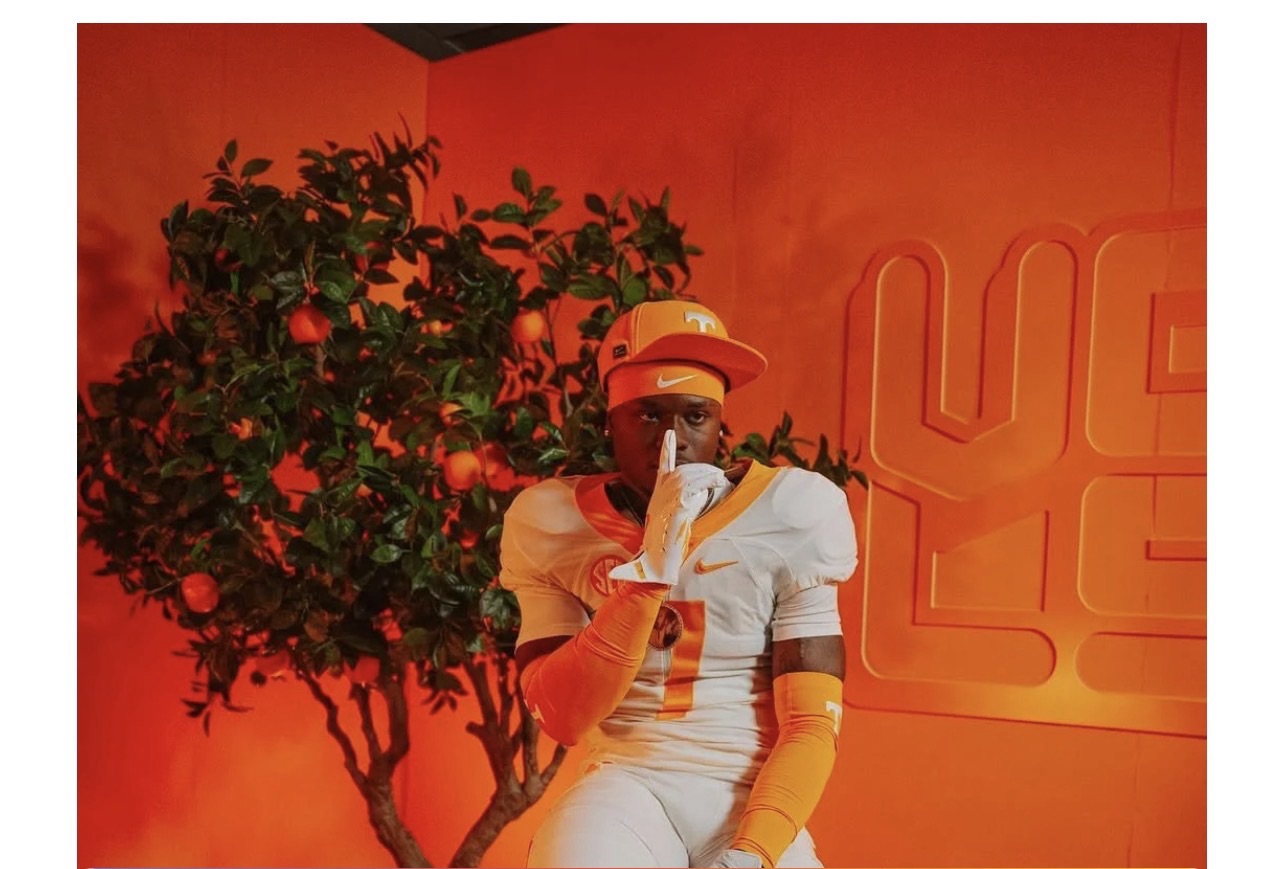
The name actually came from Tennessee football message boards years ago. Nearly 20 years in fact.
There was this legendary message board guy who religiously kept Excel spreadsheets tracking every Tennessee football roster move, recruiting rumors, coaching changes, depth chart fluctuations, and quarterback controversy known to mankind. Completely unhinged levels of SEC dedication.
He always reminded me a little of Lynyrd Skynyrd somehow — Southern, funny, super weird and obsessive, probably operating on caffeine and emotional damage.
At some point the name just stuck in my head. It was part of his screen name “LWS”.
The site started mostly as satire and Tennessee Vols football insanity, but over time it drifted into storytelling, Southern culture, commentary, writing, and whatever strange thing I happened to become obsessed with that week.
HDR:
You built a cult following writing SEC satire and college football commentary. Do you think you’ll ever come back to that world in fiction? Or is Loser With Socks becoming more of a Western literary site now?
Barr:
I think Tennessee football permanently damages people in ways science still can’t explain, so yeah, I’ll probably always write about it.
But my writing’s definitely evolved.
At first the site was mostly satire and football insanity. Over time, I became more interested in the people surrounding those worlds — weird lonely men who stalked recruits, boosters, Southern towns, obsession, identity. That starts drifting into literature whether you planned it or not.
Then the NIL era and the transfer portal hit, and it changed college football in a way I honestly didn’t care for.
NIL lifted the rock and exposed the dirty underbelly of the sport that used to stay hidden — or at least restrained or governed by adults.
Frankly, I just stopped caring the way I used to. I grew up watching legends play in Knoxville like Manning, Kiner, Majors, Dale Jones. Guys who wanted to wear orange. Guys who bled for Tennessee.
Now half the sport feels like NFL free agency with marching bands.
Hell, even UTEP and NMSU suddenly have outside playoff hopes this year. Have you seen some of those rosters? Shoo-wee.
Makes you wonder where all that money suddenly came from.
And honestly, moving back to New Mexico changed me creatively too.
Cloudcroft slows people down. The mountains forces reflection. You spend enough evenings staring out across the Tularosa Basin and eventually your writing becomes quieter and stranger.
So I don’t think Loser With Socks becomes purely a Western literary site.
I think it just becomes a place where SEC football culture and the modern West collide. At least that is the plan.
HDR:
(We were sitting on the cabin’s expansive porch about to discuss border violence and hard men reinventing themselves in the Southwest when Maria crossed the porch barefoot with a wooden tray balanced effortlessly against one hip: grilled salmon, roasted vegetables, and dark roasted coffee.)
I have to admit, the promise of a delicious lunch completely disrupted the image I had formed of you and this place before driving up here.
Honestly, it was one of the more civilized lunches I’ve ever had during an interview.
Maria was fantastic in setting all of this up. Before we talk about you and your works, tell me more about her.
Barr:
(Laughing)
Yeah, that lunch and Maria probably ruins the whole tortured-writer image.
Barr:
So, let me tell you a little bit about Maria.
Maria’s originally from Las Cruces. She probably told you that she was a volleyball player at NMSU. These days she teaches pre-K here at the local school, which honestly tells you more about her patience level than anything else I could possibly say.
She lives over near The Lodge in one of those town houses overlooking the golf course.
That’s actually how we met.
One day I hooked a golf ball so far off the fairway one afternoon that it landed somewhere near her car while she was carrying in her groceries. I helped her take in the groceries, and she helped me find my ball, which was a Titleist Pro V1x by the way.
We found the ball and she still agreed to have coffee with me later, which I continue to view as either evidence of kindness or deeply questionable judgment.
She handles my cooking, shopping, and most of the practical structure of my daily life at this point.
The cabin would probably devolve into Fairlife Protein Shakes, half-finished manuscripts, and stacks of books left half-read without her.
But that’s part of the atmosphere I wanted up here. Good food. Strong coffee. Big fireplace. Heavy chairs. Navajo blankets. Books stacked everywhere. Holloman F-16s going supersonic over the mountains every now and then.
I spent enough years in FBOs, airports, and hotels. At this point I wanted the exact opposite of that suitcase lifestyle.
So far, it’s working out pretty well. Ask me again after I spend another six months of winter up here.
HDR:
Your short story “Thunderheads Over Tularosa,” recently nominated by the New Mexico Writers Association for Literary Short Fiction, was your first step into a darker and far more grounded story than some of your earlier LWS work.
The story follows a BORTAC operator conducting surveillance near the Deming corridor who witnesses a cartel ambush on a Mormon family convoy in northern Mexico before rescuing a young Mexican woman traveling with the group.
That story seemed less interested in action and more interested in migrant trauma, survival, and the psychological damage surrounding the Border
I felt as if it showed your chops for stronger border issues and themes, but what I have heard through the grapevine is that Almost feels more deliberate than your earlier fiction. More literary, maybe.
Did that story eventually evolve into Almost?
Barr:
No, not at all. Almost is going to be 45 degrees opposite. At least in my head so far it is going to be way different than Thunderheads.
Thunderheads was really the first time I stopped wrting about football and focusing on the border. The story became a law enforcement or national security lens and started viewing it as a human tragedy unfolding across the Mexican border.
The girl in the story wasn’t some cartel figure or political symbol. She was just a young woman caught inside a violent machine larger than herself. Most people moving through crossiing the border aren’t villains. Some of them are poor, desperate, manipulated, frightened, or trying to survive circumstances most Americans will never fully understand.
Once you spend enough time around the border, you realize everybody involved eventually carries trauma home with them — the Feds, the immigrants, ranchers, families, everybody.
HDR:
Are writers like Cormac McCarthy lurking somewhere in the background of this project?
What writers influenced you? And when did you start writing seriously?
Barr:
I came to writing late. My late 40s, still in the military. Obviously, I began with sports, Tennessee football. Later, I moved into the western short stories. I have been really lucky to be published in many fine magazines and journals.
So you understand, most of my adult life was spent flying airplanes, working around military and federal law enforcement, and trying to survive professions that don’t exactly encourage creative writing.
My writing started almost accidentally during PTSD therapy.
Somebody, my therapist, suggested I start putting things on paper instead of carrying everything around internally all the time. I discovered pretty quickly that fiction lets people tell the truth sideways when they’re not ready to tell it directly.
As far as writing influences go, McCarthy obviously. Anybody writing seriously about the modern West has to acknowledge him whether they want to or not. I especially loved his work about the El Paso and Southwest New Mexico areas.
Larry McMurtry too. McMurtry understood loneliness, aging, and disappointed men better than almost anybody. The character work in Lonesome Dove is probably the best I’ve ever read.
And Clancy completely infected my brain early on — intelligence, airplanes, subs, SOF environments, all of that complex machinery operating beneath ordinary life.
Honestly, I hope that Almost can properly represent those writers influences on me.
HDR:
You spent years in northern Alabama before eventually moving west full time to Cloudcroft. That feels like more than a geographic change.
Barr:
It probably was. I just got tired of the traffic and the humidity. It was time to go.
Paint Rock will always feel almost home to me. Small-town Alabama. Tennessee Football. Churches. Family history. Everybody knowing everybody else’s business before after-church lunch.
There’s a comfort in that world, but eventually it started changing and not for the better. I know nothing stays the same but I wanted to change somewhere else.
The Southwest gave me a distance. Not just physical distance either. Mental distance. Look at these big blue skies. The big clouds. More silence.
I had actually lived in Cloudcroft before years ago, so part of me always knew I would eventually come back here.
The place felt different the first time I spent real time in the mountains again after years away. Not dramatic. You’re sitting at nearly ten thousand feet surrounded by pines looking west across the Tularosa Basin while those big old thunderheads roll through the desert to the mountains. Ok, maybe it is dramatic.
The strange part is the silence doesn’t necessarily make people calmer. Sometimes it just gives them enough room to hear themselves think clearly for the first time in years.
END OF PART I — PREVIEW OF PART II
Part II moves deeper into Almost itself — UFOs, cartel finance networks, border politics, and mountain towns, and why the modern West still attracts people attempting to disappear without technically vanishing.
“The West stopped promising salvation a long time ago,” Barr says at one point. “Now it mostly offers distance.”



Leave a Reply